20091025

Please click on the pictures to enlarge


20090927

The Seed To Ash Cycle of Biomass Household Energy


The Seed-to-Ash Energy Cycle

A Brief Guide to Biomass Energy Farming and Utilization in Kenya


•Correct management and utilization of biomass is key to enhancing the efficiency of what can be a carbon neutral, environmentally friendly green energy solution for East Africa, the seed-to-ash-cycle.
•The most glaring loophole in the bio-energy system in Kenya is the general lack of widespread re-afforestation of wood energy crops.
•Use and knowledge of ‘fireplace technologies’ i.e. energy saving stoves, well managed open fire’s, drying firewood etc. needs to be further disseminated and the importance amplified.


•Knowledge and practice of dynamic holistic harvesting and processing of woodfuels needs to be more widely practiced. Charcoal making is a skilled artisan’s task, much like plumbing or mechanical work, training is extensive in order to achieve a high level of efficiency and sustainability. (and charcoal makers can become some of the best treeplanters)
•Structured implementable government policies focusing on opening new avenues of monetary incentives for good land husbandry practices. Training and certification is a must.
•Emergency re-afforestation efforts must be undertaken immediately to prevent further degradation of Kenya’s (and our neighbors’) environment. Widespread aerial tree seeding as practiced in China, Canada and the Philippines needs to be undertaken as soon as possible.
•Small scale polyculture agroforestry for Food, Fuel and Fodder following holistic management plans is already gaining widespread acceptance in rural areas but must be upscaled.
•Enabling those engaged in the seed-to-ash cycle, real opportunities to access money from carbon credits, will improve successful adaptation to climatic change and global warming among those it detrimentally effects most.

Sustainable Wood Energy Systems Kenya


Click on Image for a Larger View!

20090807

Looking in at the Demonstration Bakery in the Arboretum


Perfect for small-medium enterprises that are tired of expensive or unreliable non-renewable energy sources(gas/electricity).
Save Money, Save Energy.
The Ultimate Charcoal Oven!
Available in Nakumatt and Uchumi Supermarkets in Kenya, Uganda and Rwanda!

A Top Loading Continuous Batch High Effceincy Charcoal Retort.


This is a top loading continuous batch charcoal retort. It makes light charcoal from 1/2inch to 4inch diameter sustainably harvested tree branches. Ideal for maximizing efficiency and output.
Prices start at 320USD*
*Includes training, use and upkeep lessons plus 1 packet of Kenya Seeds Of Change tree seeds

20090412

Kenya Seeds Of Change


The Kenya Seeds Of Change initiative aims to contribute towards national afforestaion by land owners through the countrywide sales of inexpensive tree seeds and the promotion of direct seeding woodlot establishment. Seeds are by far the best method of promoting wide scale tree planting in Kenya. These are some of the benefits from the direct planting of tree seeds compared to planting seedlings;

•Seeds are Cheaper! (At roughly 0.25cents per tree compared to 20+ shillings per seedling)
•The tree’s hardiness and survivability increases.
•Thousands of seeds can be transported and stored much more easily then thousands of seedlings can until the planting time comes.
•Seeds can be massively disseminated through existing retail outlets with minimal price increments from producer to consumer. Tree seedlings face problems of availability at the right time, dissemination logistics etc.
•Partially domesticated indigenous tree species are best grown from seed. They are already adapted to Kenya’s climate, soils and pests and the trees are currently widely used and understood by the population.
•Seeds simplify the enhancement of the genetic diversity of planted woodlots.
•The above/below ground biomass ratio is more conducive to healthy growth when a tree is planted from seed.
•Overall financial losses and risks from drought, animals etc. are significantly less under direct seeding.

Available at the Carnivore Restaurant, UniqEco in Karen, Lukenya Agrovet in Kitengela Town,Ol Choro Wildlife Conservancy in Aitong, Roslyn Green Gardens in Westlands with more outlets to come!

The first best time to plant a tree was 20 years ago, the second best time is NOW!!!


(K-SOC)

20090404

The Kitengela Arboretum April 2009


14 years of growth. Both of the town and of the tree's.

20090325

The Kitengela Arboretum circa. 1993


This a an old picture of the Kitengela Arboretum from the Namanga Road.

20090302

The Kuni Mbili ~Two Sticks of Firewood~ Jiko in action.


Also pictured is some 'clean-up' charcoal made using a 200ltr steel drum, inginuity, and the waste branches and bark left at the site of large charcoal kilns.
N.B see "The Scorched Earth" post at bottom of page.

20090219

Tree Planting In the Maasai Mara


On the 4th of Febuary 2009 we planted a barrier ring (wind, shade, fuel and visibility) around the O.O.C head quarters comprising of acacaia xanthoplyia, teclia nobilis and acacia poylacantha. When harvested, the branches of these tress in the next 6 years will be able to supply the fuel for cooking on the 'kuni mbili' (two sticks of firewood) type of energy saving cookstove used at the ranger post and HQ.

20090119

Carbon Finance for Clean Cooking-time to grasp the opportunity.


  • The main driver is long term economic sustainability and forest conservation. Clean cooking is essential if the MDGs are to be achieved.
  • Results from case studies show a rule of thumb savings of 1-1.5 tons of CO2 per stove per year.
  • 90% of staple food needs to be cooked for long periods of time and the majority of the poor cook using unsustainable and inefficient methods.
  • The majority of cookstove manufacturers are small to medium enterprise's lacking capital to rapidly industrialize production rates to match market demand. Capital from carbon credits would greatly enhance output and therefore greatly reduce national GHG emissions.
  • As an urban and rural household energy source, charcoal and firewood burned in highly efficient cookstoves not only lower the risk of smoke related diseases, they enhance food security, environmental custodianship, and energy self reliance while reducing the amount of CO2 released into the atmosphere.
  • The strongest facet of this application of carbon finance is that the finance is paid after the delivery of measured output (i.e. company invoices for units of cookstoves sold). The outputs are rewarded rather than the inputs financed.
  • The target stoves are the KCJs(Kenya Ceramic Jiko) invented by Dr. Maxwell Kinyanjui, in accordance to GTZ experiences the stoves are efficient (min. 40% fuel saving), clean burning, adapted to local needs and habits and are easy to use for the cook to use.
  • Typical cost per stove is 7€ at national supermarkets, compared to 30-40€ for solar or LPG stoves.
  • Switching to improved cookstoves has been proven to cut the mortality rate of lower respiratory illnesses and chronic obstructive pulmonary disease by an estimated 83%.
  • For the poorest communities, despite the low cost of clean cooking, the initial capital outlay is the major barrier. Carbon finance is potentially a way of overcoming such a barrier. With a typical saving of one ton per year of CO2 equivalent (TCO2e), an efficient cookstove could earn upwards of 30€ assuming a 3 year life.
  • This level of funding is completely sufficient to supply cookstoves to the poorest communities relying most heavily on woodfuels.
I would like to extend my thanks to Boiling Point issue No. 54, published by the Household Energy Network(HEDON). All references can be obtained online at their website; www.hedon.onfo/Boiling Point


20090112

The Arboretum Project

Kenya Private/Public Arboretum Project.(KPPA)

-draft-


    According to the Kenya Forestry Act of 2005,(part I. caption.30). 'Each and
every local authority, shall establish and maintain arboreta, mini forests or recreational parks for the use of persons residing in within its area of jurisdiction.' This will be a designated managed area that is open and accessible to the general public. This endeavor is being undertaken to increase public interest and awareness in our overall environment and forestry in particular whilst disseminating appropriate arboreal and silvicultural techniques in the many and varied biomes of Kenya.

    The mission of the Kenya Private/Public Arboretum Project is to promote our quality of life by seeking, through scholarship, research, and education, collaborative solutions to growing demands on our natural landscape and its resources.

    In rapidly expanding metropolitan areas, it will serve as an educational facility, and a microcosm of the human/nature continuum in human habited landscapes, the Kenya Private/Public Arboretum Project shall strive to become an interdisciplinary 'institute for land health' of district, provincial, and perhaps national significance."

    The area set aside for the arboretum will be a minimum of 5 acres and it will be run as a private/public enterprise, (managed as a private business enterprise run for the benefit of the general public) this will be done to ensure that the maximum amount of holistic land husbandry will be applied so as to generate self sustaining profits through demonstration models of small scale organic agroforestry food, fuel and fodder sites, seedling sales and education and extension work.

     Core focuses will be on endemic tree species for biofuels and locality specific agro-business models that will offer alternate income generating land use modes for rural and urban farmers whilst providing a place of peace and enjoyment to the public at large as well as a diverse habitat for wildlife.


    The
Kitengela
Arboretum

The Kitengela private Arboretum was established in 1996 on the outskirts of what was then a sleepy Maasai trading center as a woodfuel demonstration project. One of the initial goals was to see just how long it takes one tree to grow one bag of acacia charcoal in a semi arid area, (8 years with correct planting and managing). Some 14 years later, work at the arboretum is still focused on detailed research of the production, management, and processing of wood fuels, along with the development and production of new and original designs of charcoal and wood powered stoves and ovens.

    The arboretum now sits on a two and a half acre piece of land right in the middle of what has now become a vast urban township, zoned in agricultural land, Kitengela Town is home to more then 100,000 people with many more passing through. Having developed rapidly with nil to minimal urban planning systems in place, the Arboretum is located in between a large steel mill, a church, a suburban middle class housing estate and the tin shacks of labor lines that service the steel mill. This unintentional placement makes for perfect scale model of how arboretea compliment all facets of urban life, it is an immediate carbon dioxide sink for the steel mill, the over hanging branches on the edges provide shade to both the church goers and factory workers and it serves as a aesthetic barrier for the housing estate.

    As of 2008 there are 24 species of dryland adapted tree species, some reaching over 30 feet high with fully developed crowns. About 90% of the arboretum receives a high level of shade and leaf litter among the trees is 3in deep in some places. This has greatly encouraged a growing population of bird life, 18 species have been confirmed, up from 3 species when it was just grassland, there are at least 2 species of nocturnal bats and the forest is host to a large and diverse number of insect species. Introduced mycelium spores have gained a foot hold in two areas of the forest with mushrooms coming up during the rains. In effect the arboretum has become an island of biodiversity in the turbulent urban sea of Kitengela Township.

    The Arboretum has become quite useful to the people of Kitengela. It has become a popular place for photo shoots of weddings and family pictures. The District Commissioner eats a yearly goat with his entourage and the accepted popular name for the road it is on is even Forest Road.

    Future plans for the arboretum are focused on the opening of the Dryland Tree Planting Resource Center in 2010 which will be comprised of a conference hall, library and short term accommodation for students and interns.

    Activities at the arboretum are based around the dissemination of forestry related information. Training sessions in tree seedling propagation, seed collection, efficient utilization of wood by-products, beekeeping, small scale dryland food production, weaving trees for live sculptures, energy efficient charcoaling and many other silvicultural techniques are held on a quarterly basis during the annual open days. The KPPA is also home to the largest independent firewood and charcoal cookstove and oven factory in East Africa.

Being a private residence and arboretum, reservations are to be made one week in advance for visits; entrance is free of charge for individuals of the general public. For school visits and other large groups a small fee is charged depending on duration of visit and amount of participants.


Upcoming up events-

Annual 'Who can eat a whole leg of Goat' contest January 31st 2009 The Great Kitengela Pumpkin Challenge March 4th 2009

Charcoaling- Upscaling Efficiency and Production- a speech with Dr. Maxwell Kinyanjui. April 12th 2009 Renewable Woodfuel Production: Lessons from the field for long term policy implementation- Teddy Kinyanjui July 4th 2009 with Mr. Marc Goss and Mr. Marcus Church as guest speakers. Key note Address will be given by Prince Peter Saphia Beckmann from the Polish Royal Dioyonisis Society.


Contacts:

The Kitengela Arboretum Ltd.

Po Box 23058

Lower Kabete

Nairobi Kenya

teddykinyanjui@hotmail.com


Musaki Enterprises

The Forest at Kitengela

Energy Efficient Cookstoves

musakitrade@yahoo.com

0713564768


20081230

The eco housing unit and energy efficient charcoal kiln


This is the first of a long line of kilns and modified manyattas that are almost exclusively made from on site materials. Fired clay bricks. Local raw material, local energy and labour. all thats needed is a door, window and a oven jiko! material and labour cost per unit in Ilariak as of dec. 2008 ~ 15000/= (200$)!

Firing the raw bricks in an open field kiln~ an external clay lining would of increased firing temps...next time...not on boxing day anyway..

20081220

The Ilariak Carbon Capture Center


Growing one of a kind furniture at the arboretum in kitengela


these are a few examples of a very specialized art form of twisting trees together as they grow over many years to make incredible bases and forms for making unique furniture. they also compliment the arboretum as a whole by showing the many diverse ways that trees can be fully utilized

20081209

The Kinyanjui Jiko


the following is a price guide to our line of charcoal ovens retailed at nakumatt and uchumi supermarket branches country wide and at our company’s factory direct sales office located at the entrance to the kitengela arboretum on the Nairobi/Namanga highway.
The Small Sizes- 2 levels 8500/=
3 levels 10500/=*
*optional 5 ltr hot water heating tank 4000/=
The Medium Sizes- 2 levels 17000/=
3 levels 19500/=*
*optional 11ltr hot water heating tank 8000/=
The large industrial sizes- 2 levels 27000/=
3 levels 38000/= ** the optional hot water system can only be ordered at the factory shop.


Baking, Roasting, Steaming, Toasting---Anywhere any time, rain or shine, and all this on only a handfull of our sustainable charcoal!
Established in 1992, Musaki Enterprises has led the way in innovation, efficiency and affordability in the charcoal cookstove market.
Our line of charcoal ovens are handmade by Kenyan artisans to the highest levels of quality and are tailored directly to our customers needs: from compact domestic and safari models to high capacity micro-enterprise, institutional and industrial scale models.
As with all ovens, the charcoal oven can perform a variety of tasks; baking, roasting, toasting, steaming and boiling. The amount of charcoal required varies according to the size of the oven and what is being cooked, but it is on average 40% cheaper then electricity and 15-20% cheaper then LPG gas. Unlike electric/gas ovens the charcoal oven can be used absolutely anywhere at any time and is powered by a renewable energy source.
Musaki Enterprises Ltd.
Po Box 23058, Nairobi
Lower Kabete
000804
Phone: 0724690352 or 0713564768
Email: teddykinyanjui@hotmail.com or musakitrade@yahoo.com


Charcoal makers turned Tree Planters in Narok


Across the board most charcoal makers that i have ever met would rather be planting trees. When it comes down to a choice of how to make ones daily bread, tree planting is less dirty, not as hot, has less social scorn and of course zero police harassment. And the long term out-look on job security is greatly enhanced! The quickest way to putting a halt on the degradation of forests though inefficient colliers (charcoal making industry's) would be for landowners (public or private) to offer tree planting employment during the rainy season and then charcoal making employment during the dry season! (as it is very little charcoal gets made when it rains alot) After all the typical charcoal maker is much like a mechanic or a plumber; they are a skilled carbonization technition. And can become equally skilled tree planters.

Small scale charcoal production in the arboretum


Easily one of the most straight forward ways of making charcoal with an aim to having an extremely high recovery rate. Twigs as small as 1/8" can be fully carbonised. This is one mitigating technique to increasing efficiency in areas currently under going intense charcoal production. it also localizes the area of carbonization and reduces land lost to the 'scorched earth' phenomenon.

Moringa oleferia


possessing one of the highest nutritional values of all green leafs, the seeds of moringa oleferia also purify water, removing up to 99% of dangerous pathogens and contaminates. When used in zero grazing systems, it increases milk production by up to 45% and can also be fed to poultry and will increase real meat gain by 30%. An all around excellent permaculturaly adept tree.

20081208

The Aitong Bio-Fence

2008 ‘Live Fence’ Agroforestry Fencing Project
Theodore M. Kinyanjui

Overview
Using established holistic agroforestry methods and techniques to implement a ‘live fence’ land-use plan around selected landowners homes and livestock enclosures.

Principle Components
1.Intiating a food, fuel, fodder and profit generating system of fencing area resident’s homesteads.
2. Using a holistic land management approach to achieve a fully sustainable, certifiably organic, carbon neutral method of agroforestry.
3. Integrating modern development and human encroachment with a biodynamic method of keeping the Maasai Mara’s appearance pristine.

Key Objectives
A: Identify willing participants with suitable locations to implement primary project developments.
B: Develop a fair cost sharing initiative with local landowners and area hotels and lodges.
C: Training of a local extension officer to expand the initial demonstration ‘live fence’ program throughout the Ol Choro/Lemek/Aitong/Koiyaki region.

Components
1: This agroforestry system will provide the homeowner with six key uses;
a. Security: the outer most line of trees will be acacia polyacantha ‘the falcon claw tree’ which due to its prevalent thorns and many branches will not only provide a high level of security but the prunings are also an excellent source of sustainable firewood.
b. Timber and Poles: the second line of trees will be comprised of eucalyptus teritecornis, an inedible, extremely drought tolerant species which matures in five to ten years and produces excellent timber and poles.
c. Medicinal Values: the third line of trees will be neem, a drought tolerant tree, which among its many uses,(fuelwood, charcoal, fencing, poles and shade) also has many scientifically proven medicinal qualities.
d. Food Security: the forth and innermost line of trees will be moringa oleifera, an easily propagated tree that has been proven to have one of the highest nutritional contents of any cultivated plant which not only can be eaten by people but is also an excellent source of fodder for livestock during droughts or can be encompassed in a zero grazing silage system. In addition, its seeds, when crushed can be used for water purification, removing up to 99% of contaminants in water.
e. Privacy, Windbreaks and Shade: By using the aforementioned tree species, when managed in a rotational system, some will mature at a faster rate and be harvested first while the others will fill in the gaps left behind and provide a continual barrier around the homestead.

Why invest in a charcoal oven?

 Why invest in a charcoal oven?

Since the introduction of our line of Energy Efficient Charcoal Ovens in 1992, hundreds and hundreds have been sold regionally and countrywide, to all manner of people for all manner of uses.

For some, a charcoal oven is an integral part of the home kitchen, during typical power cuts, or when the family just wants that special Kenyan charcoal aroma with the Sunday dinner chicken and potatoes or with fresh home-style cookies and cupcakes. Simple to ignite and easy to use, the smaller sized ovens are light and very sturdy and are well suited for camping trips or outdoor patios. Imagine, fresh bread daily, 100 miles away from electricity! Or maybe just as a clean easy method of cooking a hot lunch on weekend picnics. They are also an incredibly sustainable and cost effective way of reducing household energy consumption. Our ovens are about 45% more energy efficient for bread baking then an electric oven and roughly 30% more efficient then a gas oven.

The larger commercial models are ideally suited for businesses for which a prime monetary concern is either cost or lack of access to LPG gas or electricity. Butcheries/nyama-choma joints, bakeries, hotels and micro-enterprises have all found that switching to the Musaki E.E.C.Os greatly increases profit margins by significantly reducing energy costs.

In conjunction with the Woodlands 2000 Trust, in just under 6 years we have already established over 20 acres of certifiably sustainable charcoal woodlots. Currently the Trust is developing and enacting comprehensive, permaculturaly based holistic natural resource land use plans in Kajiado and Narok District to help wean Kenya off of imported fossil fuels used for cooking.

The “Scorched Earth” Charcoal Kiln Re-habilitation Project.


Woodlands 2000 Trust
Promoting holistic drylands natural resource management.
The “Scorched Earth” Charcoal Kiln Re-habilitation Project.

Introduction: The ‘scorched earth’ term is coined from a military tactic used by armies throughout history. It simply states that an army will level and burn (scorching the earth) every thing so as to deprive anyone else the use of that land once they have left. The key externalities associated from traditional charcoal production methods in dry land areas in Kenya are very analogous.
Once the ‘army’ of charcoal makers has moved on they leave behind patches of earth where the kiln was located that have been subjected to high temperatures for long periods of time. This causes a number of serious land degradation issues; at least one foot below the surface of the land is essentially sterilized, bacteria, nematodes, earthworms, seeds, humus, rhizomes, all die or are destroyed from the partial combustion of large amounts of wood in a closed kiln. In areas where the silica content is high this treatment produces what are essentially uncompacted red-fired clay blocks. This type of treatment takes over 15-20 years for the soil to even begin to start recovering. Where the unused branches and thorns are piled up, they cover the grass for grazing for up to 4 years until they sufficiently rot down enough for livestock to access underlying pasture.
This leaves the area where the kiln was situated directly exposed to the elements and particularly prone to erosion. Typical sites that data has been collected from, average 482m, which is roughly 1/100th of an acre, which may not seem like much, but in areas under heavy charcoal production, there may be 10 or more kilns per acre which means that the land owner loses 1/10th of an acre every cycle. In areas where intensive charcoal production is taking place, this amounts to hundreds of acres so finely spaced out that they escape immediate notice of the landowner. In the current area of operations (Narok South, Maji Moto area), the main land use model is based on semi-nomadic pastoralism. This means that the number of animals per acre dictates the land’s carrying capacity of livestock. In the focus area it is around 3 acres of land per head of sheep and 6 acres of land per head of cattle. As the loss of pasture increases, the competition for resources (grazing land) amplifies.

Objective: To exemplify appropriate methods of rehabilitating ‘scorched earth’ areas into productive, biodynamic multi use zones.

Strategy: Micro-woodlot establishment will be the key tool in rectifying current and preventing future destruction. Woodlots will be securely fenced with the waste braches from previous charcoal production; the areas will undergo double digging to mix in adequate amounts of manure and humus, then it will be high density directly seeded with endemic and carefully selected tree species and will be irrigated by rainfall. As the trees grow, the tight spacing will give them a growth tendency of being tall and straight as they compete with each other for light. This is done so that when the time comes to harvest them, they are ideal dimensions for cutting, transporting, processing and using. That is 2-3in thick and 3-4ft long. When harvested correctly the tress will coppice, therefore ensuring a future woodfuel source.

Budget: The initial demonstration micro-woodlots will be externally financed. The charcoal makers themselves will finance all others under stipulation from the landowner as part of the charcoal making process and cost. Labour is the only key input. That is because all other inputs are locally available. Seeds can be collected from the wild; manure is free from the landowner’s livestock enclosure, the fencing material is a waste by product that is already on location. The labour cost for one kiln of typical dimensions to the area is around 3000ksh.

Conclusion: Soil and useable land loss is one of the greatest threats to riparian systems in dryland areas. The use of low efficiency charcoal kilns has a huge unintended impact on the ecology of areas under production. Coupled with minimal to nil reforestation programs this problem will continue to degrade the land and therefore adversely affect area residents and also all people living downriver.

20081202

The EECO

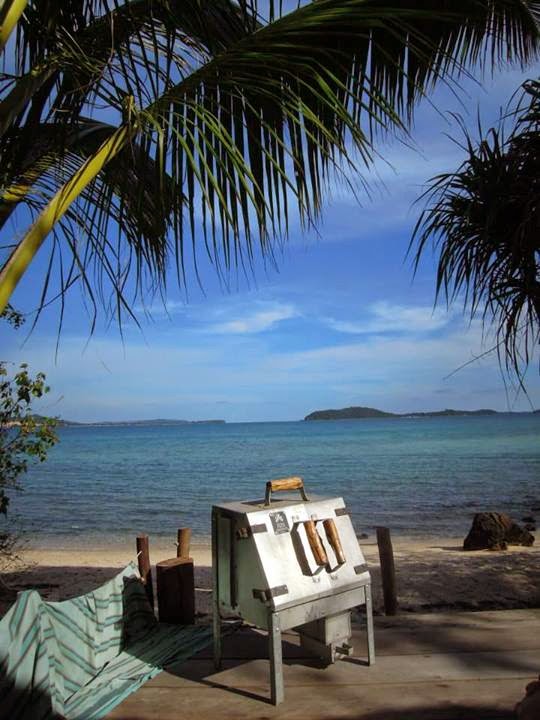
the smallest sized oven, the safari-micro

20081130


The oven